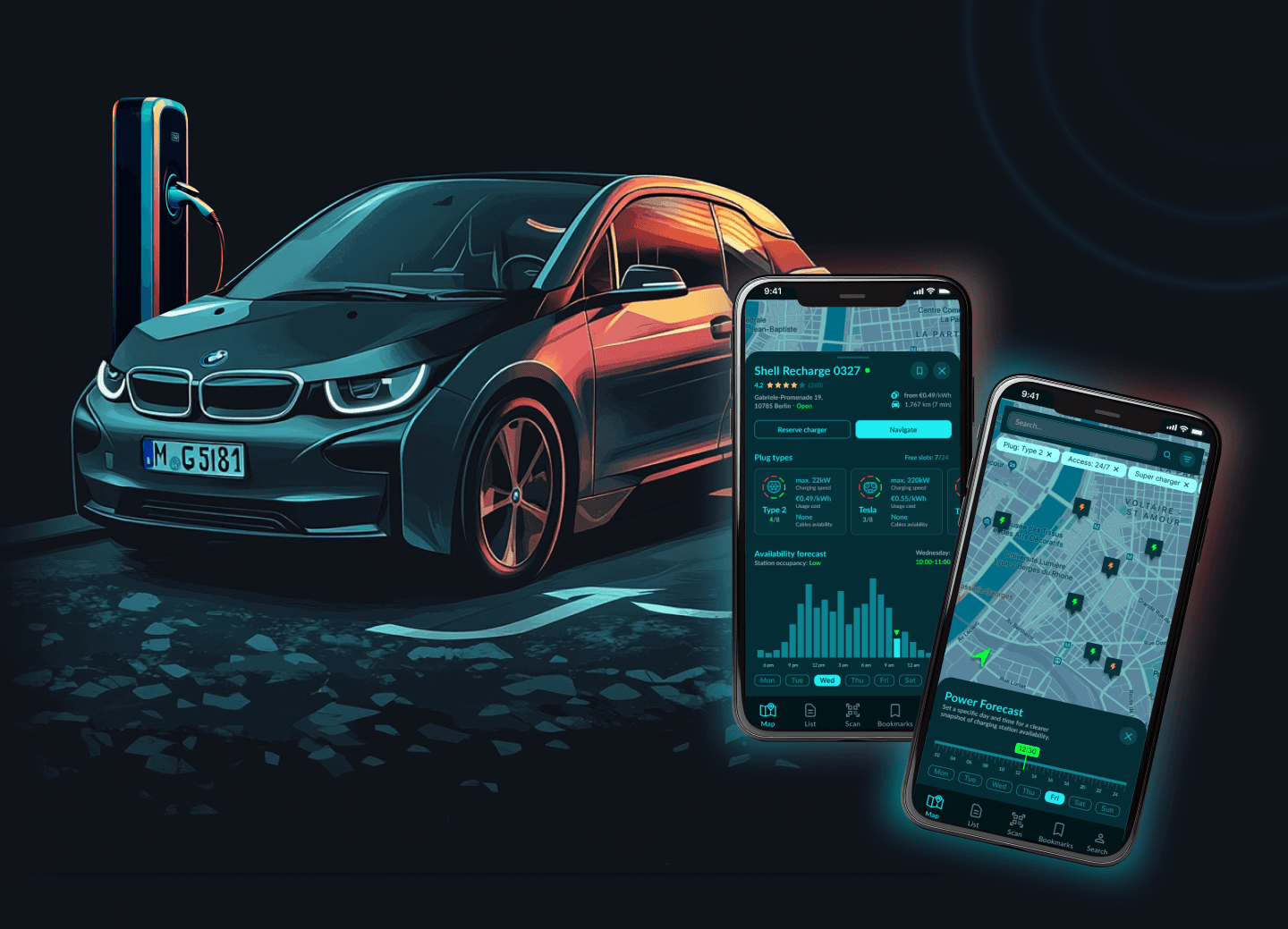
EV Charging App
Client
Creativo
Industry
Creativo
Category
Mobile App
Role
Product designer
Location
B
Date
Web Design
Problem Statement
Finding a charging station that aligns with a planned route is a challenge for electric vehicle drivers, particularly in areas where stations are sparse or located in busy, congested regions. This leds to detours, increased travel time, and potential anxiety about running out of charge, ultimately hindering the overall EV experience and deterring users from long-distance travel.
Objectives
Show the real-time availability of charging stations (free/occupied).
Use past utilization data to forecast when a charging station will likely be free.
Highlight times when the station is usually busier or less crowded.
Provide estimates of charging times based on the station’s current and expected load.
Allow users to reserve charging slots and type of charger.
DESIGN PROCESS
The project, including both the design and case study, was completed in just three days. My primary objective was to gain a deep understanding of the target audience by creating personas, identifying user pain points, and developing a prototype for the app's main screen. I focused particularly on designing a robust forecast feature to address the users' needs effectively.


TARGET AUDIENCE
The target audience is one of the most critical points, for whom an app solves a problem or meets a need. The generation in which we were born influences many things in our lives, including our relationship with technology. As a result, it’s valuable to consider generational demographics as you design and develop your app.
Based on a quick survey and internet research I defined that we can call our target audience Generation X and Millenials. This allows me better understand the behaviors and expectations customers will have when using Charging App.
Electric Vechicle Driver Demographics

App Design for Generation X
When designing and developing for Generation X users, it's important to keep in mind that these users are value-driven—weighing factors like cost, time, and energy simultaneously. Skip the fluff, and deliver relevant and straightforward information, design, and solutions to this demographic and you’ll find this generation with the highest brand loyalty to be customers for life.
App Design for Generation X
Millennials place a high value on experiences over things, causing them to leverage technology to make it work for them. Digital products would do well to recognize their desire for connection and flexibility and provide a solution that enhances their real life. This generation has grown up with the internet at their disposal and they expect transparency from companies and their products. They know quickly if something is providing value, and if they’re not sure, they’ve created a system of accountability through ratings, reviews, and online forums that will tell them. When it comes to design and development considerations, these users can intuitively interact with digital products, so keep the main focus on the value you are providing, but have fun with it. They are the early adopters of technology and will continue to be adaptable as tech evolves.
PERSONAS
These two personas exemplify predicted individual preferences. They were chosen to represent various demographics, their use cases, and perceptions of EV ownership and charging. Information about daily habits was received during conducting user interviews (3 people: EV owners and persons who often use carsharing) and also based on EV Consumer Behavior Report by Fuels Institute.1


PAIN POINTS
I've conducted user research and created personas to understand our users, their needs, and the hurdles they may encounter as they are trying to address those needs. To create a user-centric product design that serves the user goals as effectively as possible we need to define pain points — problems in the customer experience with a product or service.
1
Impossible to plan a ride. Having to drive from one charge to another
Finding an
available charging station in the city center on workdays is challenging
2
3
Insufficient info to choose between equally available stations
Uncertainty about EV charging duration and station availability
4
5
Inability to reserve a charging station in advance for timely use
PROTOTYPE
The prototype was developed within a short project duration of just three days. A minimalist design system was created with a limited set of components, providing just enough functionality to effectively address the project's requirements.
KEY METRICS
By using the following metrics, companies can validate and improve EV charging app forecasts, ensuring accurate, timely, and useful information for users and providers:
Charging Station Utilization Rate:
Measures how well the forecast predicts actual station usage.
Energy Demand Coverage:
Assesses how forecasts match real energy demand, especially during peak times.
User Engagement:
Tracks how often users rely on forecast recommendations.
Time-Based Metrics:
Evaluates accuracy based on time variations, like rush hours or weekends.
User Opinion Score:
Gathers user evaluations on prediction precision (e.g., 1–5 stars).
System Efficiency:
Monitors prediction speed and operational performance.
Scalability:
Tests how forecasts perform as user and station numbers grow.

CONCLUSION
The design process prioritized user experience, focused on intuitive navigation, clear visuals, and actionable insights that enable drivers to make informed decisions about their charging needs.